Due to forecasted storms, free sand for sandbags is now available on a first-come, first-serve basis at nine City of Phoenix parks.
Food Systems Grants
On This Page...
- Food Systems Grant
- Food System Grant Guidelines
- Food Systems Grant Guidelines and Templates
- Food Systems Grant Virtual Sessions
- Frequently Asked Questions
- 2026 Food System Grantees
- Resilient & Sustainable Agriculture Grant
- RSA Grantees
- RSA Grant Application Documents
- RSA Information Sessions
- Contact Us
Food Systems Grant
The Food Systems Grant aims to support nonprofits, small businesses, educational institutions, and other organizations that work within the City's food system to implement projects at the community-level that deliver substantial, direct benefit to the public by addressing inequity, meeting community needs and, ultimately, increasing food access. This grant program will provide awards of up to $20,000 to support projects that empower Phoenix residents to grow, access, cook, share, and eat healthy, affordable, and culturally relevant food. The Food Systems Grant Program aligns with the City of Phoenix’s 2030 Food Action Plan and will fund projects that help create a just, equitable, and resilient local food system.The submission period for the 2027 grant cycle closed on August 31st, 2026.
Grant Process Overview:
- Apply on this website during the next application window
- Award notification within 30 days of application closing date
- Complete onboarding steps including an (vendor registration, obtaining liability insurance, introductory meeting, agreement signing, reporting and invoicing training, etc.)
- Begin and complete project within 12 months
- Submit monthly progress reports on milestone progress, outcome evaluation, & budget tracking
- Submit monthly invoices for reimbursement including proof of expenditures
- Submit a mid-point progress report (takes the place of the 6th monthly report)
- Host OEP staff for one site visit or for one media visit
- Submit a final report
Food System Grant Guidelines
Despite Maricopa County’s agricultural capacity and national leadership in food production, the food system is not working for many people in Phoenix, especially low-income, ethnic minorities, seniors, and children. The people most vulnerable in Phoenix often have limited time to cook, live far distances from grocers, and are on a tight budget.
Expanding access to healthy and affordable food for Phoenix residents, especially those facing barriers, is a top priority. Phoenix residents have expressed the need for more opportunities to grow, learn, eat, and compost within their neighborhoods, as well as the need for shared spaces that are physically accessible, inclusive and supported by culturally responsive, intergenerational food programming.
In response, the City of Phoenix (“City”) Office of Environmental Programs (“OEP”) Food Systems Program was developed to create an equitable, sustainable, and thriving local food system, guided by values such as equity, justice, health, joy, community connection, sharing abundance, partnership, sustainability and resilience. This vision and guiding values are embedded in the 2030 Phoenix Food Action Plan, which outlines community-focused strategies to help achieve the City’s 2050 goal of ensuring healthy, affordable, and culturally relevant food for all.
Project activies must meet all the following criteria:
- Project activities must take place within City of Phoenix boundaries.
- Project activities must be accessible and benefit people who live, learn, and work in Phoenix.
- Project activities must focus on contributing to a just, equitable, and resilient local food system.
Eligible entities:
- Organizations with 501(c)(3) nonprofit status.
- Community groups that have a *fiscal sponsor with 501(c)(3) nonprofit status.
- Locally owned businesses, social enterprises, and/or cooperative enterprises
- Educational Institutions (community colleges, universities, public and/or charter schools)
- Homeowner and neighborhood associations
- Faith-based groups
- Grassroots initiatives and more
Ineligible entities and activities:
- Current OEP grant awardees with an actively funded project that has not yet been completed or closed out.
- Entities or individuals not meeting eligibility criteria outlined in this document (e.g., geographic restrictions, organizational type).
- Organizations or individuals with outstanding reports, unresolved compliance issues, or unpaid obligations from prior OEP grants or to the City of Phoenix.
- Duplicate or substantially similar projects previously funded by an OEP grant program.
- Projects primarily benefiting private interests rather than the broader community.
- Activities that support the planning and design of the project before full-scale implementation.
- Projects that do not align with the program’s stated goals and objectives.
- Funds cannot be used for any political activity, including lobbying or campaigning.
- Funds cannot be used for expenses incurred before the award date.
Funding and Duration:
- Total available Grant funding for 2027 is $120,000.
- The maximum Grant request is $20,000. The minimum Grant request is $5,000.
- The grant term maximum is 12 months. Anticipated project start date is January 1st, 2027.
- Funds will be reimbursed on a monthly basis. The City may consider one advance payment per grantee of no more than 20 percent of the total grant request, based on demonstrated need.
- All funds awarded through this grant opportunity must be expended within 12 months. Any funds that are not spent at expiration of the Agreement, must be returned to the City.
Allowable Expenses:
- The majority of the budget costs should go toward direct services to Phoenix residents.
- All budget costs need to be clearly tied to project activities and goals.
Non-allowable expenses
- Expenses made before the organization is under contract
- Lodging or hotel expenses
- Organization’s overhead/indirect costs unrelated to the Food Systems Grant
- Projects not easily accessible by the public
- Purchase of land or buildings
- Purchase of a vehicle
- Infrastructure or physical improvements made:
- to a private residence
- to a location that is not publicly accessible
- without documented property owner approval
Advance Payment
- The City may consider one advance payment per grantee of no more than 20 percent of the total grant request, based on demonstrated need. The following specific criteria must be met to receive the advance:
- The grantee must provide written justification demonstrating the need for an advance payment and state how the advance will be spent.
- The advanced amount must be expended within 60 days.
- The grantee is required to submit documentation verifying the expenditure, along with supporting materials such as photos (e.g., if funds were used for supplies or equipment).
- Once the documentation is approved, the project will transition to a monthly reimbursement process for subsequent expenses.
- If the advance is not fully spent within 60 days and/or the required documentation is not provided, the grant will be terminated, and the grantee must repay the full amount of the advance payment.
Applications are first reviewed for eligibility by staff.
Eligible applications are then reviewed by panels comprised of both City staff and external subject matter experts. Panelists will review and score all completed applications based on the evaluation criteria.
An application is considered complete if it has responded to all the applicationquestions and has included the required attachments (Proposal, Budget, and if applicable, Fiscal Sponsor Letter and/or Property Owner Letter).
Evaluation Criteria
- Grant Proposal
- Intended audience must include residents living in historically underserved or marginalized areas, like food deserts, and must clearly define a plan to engage them.
- Project outcomes and metrics must clearly define what metrics will be measured and how.
- Project longevity must articulate how the project will create lasting benefits for Phoenix residents.
- Project feasibility must clearly outline the existing partnerships and/or approvals allowing you to carry out these project activities.
- Project schedule must have a realistic and achievable timeline with clear milestones and clearly outline how project will be completed within 12 months.
- Leadership biographies outline relevant lived, work, and/or volunteer experience and describe how it will benefit project activities and help connect with the intended audience.
- Grant Budget
- Budget is clear, detailed, and reasonable.
- Budget is presented in the format in Exhibit B: Budget Template.
- Demonstrates efficient use of funds, clear cost justifications, and leverages additional resources where possible.
- Grant recipients are required to register as a City of Phoenix vendor at Finance procurePHX Vendor Registration. If already registered, grantee must ensure vendor profile is active and up to date.
- If the applicant is a business entity (LLC, cooperative, etc.), registration with the Arizona Corportation Commission (AZCC) must be valid and have Active status.
- If the applicant is a 501c(3) entity,registration as an IRS Tax Exempt Organization must be valid and have Active status.
- Within thirty (30) days of signing the Grant Agreement, Grantees must obtain Liability Insurance as indicated in Exhibit D – Insurance Requirements of the 2027 Food Systems grant Guidelines and provide the City of Phoenix with a Certificate of Insurance.
- Grantees must obtain Liability Insurance to receive reimbursement.
- Grant recipients are required to sign a Grant Agreement that agrees to the following:
- Complete all project activities and expend all grant funds within 12 months of agreed upon project start date.
- Submit a monthly report for the previous month’s activities on or before the 7th of each month.
- Submit monthly invoices on or before the 7th of each month. All grant-related expenses must be documented and submitted to the City to receive reimbursement.
- Attend cohort-wide quarterly report-out meetings to review progress, share updates, and support peers throughout the term of the agreement.
- Host OEP staff for one site visit or for one media visit
- Grantee must submit a midpoint report providing a summary of the KPIs, any relevant issues, and project photos in a format dictated by the City; this midpoint report replaces the six-month monthly report.
- Grantee must submit a final report no later than thirty days after the expiration or termination of the Grant Agreement. The final report must be in a format dictated by the City’s Office of Environmental Programs, setting forth a summary of the key performance indicators described in the Scope of Work and other relevant information.
Public Records Act
Information submitted is considered a public record and may be subject to public disclosure. For more information, see the Arizona’s Public Records Act, A.R.S. §§ 39-121 through 39-161.
To learn more about how we manage your information, see our Privacy Statement at Privacy | City of Phoenix.
Food Systems Grant Guidelines and Templates
Food Systems Grant Virtual Sessions
Virtual Information Sessions
- Tuesday, August 11, 2026 | 12:00-1:00 PM
- Tuesday, August 18, 2026 | 6:00-7:00 PM
Virtual Office Hours
- Monday, August 24, 2026 | 12:00-1:00 PM
Frequently Asked Questions
If we are willing to accept partial funding in case the full project cannot be funded, do we need to include that in the grant application?
No, you do not need to include that in your application. We allocate the full amount requested whenever possible. However, if most funds have already been distributed, lower‑scoring applications may be considered for partial funding. If that occurs, we will notify you that only partial funding is available. At that point, you can decide whether to scale back the project or decline the funds.
Is it true that duplicate projects or similar projects to those that have already been funded are not eligible?
This stipulation only applies to previously awarded applicants who are requesting funds for a project that was already funded by a Food Systems Grant. This rule was created to discourage previous awardees from applying for the Grant for a duplicate project or substantially similar project.
When would I need a Property Owner Letter?
A Property Owner Letter and property owner contact information is only required for applicants proposing to conduct physical improvements at a project site not owned by the applicant.
Where can I find a food desert map?
The term food desert refers to areas with low access to affordable and nutritious food. Areas with low food access can be found on the USDA Food Access Research Atlas.
How can I demonstrate that my project is shovel-ready if a permit is not needed?
If your project does not require a permit, you can demonstrate that it is shovel‑ready by providing evidence of the planning and preparation already completed. This may include uploading design mock‑ups or design specifications as optional attachments. You can also describe the steps you’ve already taken to advance the project, such as established partnerships, existing staff capacity, or operational structures that are already in place to support implementation.
If we offer two eligible programs, can we apply for funding for both?
Yes, you can apply for funding for more than one program or project element however applicants may only submit one application per cycle and the grant request must remain within the $5,000 - $20,000 award limits. We are looking to see that the project components are cohesive and that there is an overall theme or umbrella that ties everything together.
Can you explain the “publicly accessible” requirement for physical improvements? Our nonprofit serves people with disabilities, and the garden would specifically serve our target population. // Our organization predominately serves a specific intended audience yet our events are always open to the public. Do we meet the grant requirements and eligibility?
We understand that organizations often serve a specific target population, and we consider those groups part of the general public. Our goal is to ensure that grant‑funded projects benefit the broader community, so we discourage projects that would serve only a very limited or exclusive group. As long as your project is accessible to the population you serve and not restricted to a small, select few, it meets the intent of the requirement.
Do you conduct site visits before or after disbursing grant awards?
Yes, we conduct site visits approximately 4–6 months into the grant term. During these visits, our team meets with you in person, observes your project activities, and may capture photos or video for use on our social media channels.
What liability insurance is required, how much coverage do we need and how much is it?
Commercial General Liability and Worker's Compensation and Employers' Liability are required. If vehicles will be used as part of the grant-funded activities, Automobile Liability is also required. Specific insurance limits and additional details can be found in Exhibit D of the Grant Guidelines.
Insurance costs vary depending on your organization type, number of employees, and industry. These fees are considered an allowable expense under the grant.
If granted with an award, what will be the ongoing reporting requirements? What type of information and data will the City expect from grantees?
Monthly reports, a mid-term report and, a final report will be expected, The mid-term report will take the place of the 6th monthly report and the final report will take the place of the 12th monthly report. Grantees will be required to track and submit data on the metrics proposed in your proposal. Additionally, expense reports will be required to process reimbursement requests.
Are there funding allocations between the categories?
No, there are no specific funding allocations. We have an overall $120,000 program budget for the 2027 grant cycle.
Do we have to know the specific locations or partners before applying?
No, locations or partners do not need to be finalized in every situation. If your project involves a fixed site, such as a garden at a school, then we would expect approvals for that location to already be in place. However, if your project is mobile, we do not expect you to secure reservations at this stage, since project implementation should not begin until your organization is under contract.
Is personnel an allowable expense and can the majority of the grant funds be allocated to personnel?
Yes, personnel is an allowable expense and you can make the case that increasing staff capacity will enhance services to residents. However, projects that allocate most of their project budget to personnel are generally less competitive than those that leverage staff salaries as in-kind contributions.
What is a Fiscal Sponsor and when do I need a Fiscal Sponsor Letter?
A fiscal sponsor is 501(c)3 organization that receives and manages grants on behalf of your organization. A fiscal sponsor agreement and contact information is required for an identified 501(c)3 organization who intends to provide fiscal sponsorship to your community group.
Are indirect costs allowed?
Yes, indirect costs are allowed. Total indirect costs may not exceed 15% of the total project budget. Indirect costs must be directly connected to the proposed grant project. For example, indirect costs allocated to other sites that are not part of the project would not be permitted. We ask that indirect costs are reasonable and are clearly tied to supporting the proposed grant project. Please provide a budget description outlining what the indirect costs are expected to fund.
Can the grant funds go towards the water bill for my community garden?
Rent, utilities, and other facility fees would be considered an indirect cost. Indirect costs are eligible and are capped at 15%. We do require that you provide a brief budget description describing what the indirect costs are expected to fund.
Are we able to use City of Phoenix locations for our project site and would we need a letter of support from the site?
Yes, we encourage you to utilize the classroom spaces at City of Phoenix Community Centers, Recreation Centers, and/or Libraries. If awarded, our team would partner with your organization to reserve these spaces on your behalf and would therefore not charge any rental fees.
No, a letter of support from a City of Phoenix Community Center, Recreation Center, or Public Library is not required. Instead, our team would facilitate those connections and logistics once the project is awarded.
Do I need to be a City of Phoenix Vendor to apply?
No, you do not have to be a vendor with the City of Phoenix to apply. However, if awarded, you will need to register as a Vendor during the onboarding process.
2026 Food System Grantees
Project Title: Advancing equity for adults that are Blind or Visually Impaired (BVI), DeafBlind (DB), or living with combined vision and hearing loss (CVHL).
Project Description: ACBVI serves adults who are Blind or Visually Impaired, DeafBlind, or living with combined vision and hearing loss due to accident, illness, or trauma. Food insecurity disproportionately impacts this population due to transportation, accessibility, and fixed-income barriers. ACBVI provides 3 meals per day, Monday-Friday, ensuring consistent access to nutritious meals in a fully accessible environment, as well as access to a food pantry so clients have food when they are not at the center. In 2025, ACBVI served more than 17,000 free meals. This project improves food and nutrition security and advances equitable access to food for a historically underserved population.Through this program ACBVI addresses the gaps in support systems to empower individuals that are blind to regain independence, re-enter the workforce, and address their health.
Learn more about ACBVI here.
Project title: Las Cuatro Milpas Community Care Garden & Food Forest
Project description: This grant will support the expansion of the Cuatro Milpas Community Care Garden and Food Forest. This is a sustainable foodways project in central Phoenix with 2,200 sq ft of garden space that offers educational classes, including growing practices, seed saving, culturally relevant medicinal plant workshops, and food sovereignty education. The Cuatro Milpas Community Care Garden represents the four directions and the four elements essential to sustainable land care, and each of othe gardens is dedicated to a specific food-growing or land-based project.
Project title: The Food is Medicina Intergenerational Connection Project (FMICP)
Project description: The Food is Medicina Intergenerational Connection Project (FMICP) brings together the CPLC Healthy Aging Program at Casa Primavera Senior Center and CPLC Community Center Youth Programming. Serving Phoenix’s Latino community in Phoenix, the project strengthens intergenerational understanding of food as medicine through culturally responsive education and shared meals. Older adults and youth engage in interactive learning, exchange traditions, and explore practical ways to apply food-as-medicine principles at home. FMICP promotes nutritional wellness while fostering youth empowerment, cultural preservation, and stronger social connections rooted in Latino values.
Learn more about CPLC here.
Project title: Espiritu Global Roots Leadership Garden
Project description: The Espiritu Global Roots Leadership Garden will improve the existing school garden at NFL YET College Prep Academy in South Phoenix. It will feature water-efficient irrigation, composting, shade structures, and culturally relevant plants. The program will offer sustainable gardening, nutrition, cooking courses, and entrepreneurship training. It mainly targets students and South Phoenix residents, including low-income families. Expected outcomes include better food access, health behaviors, cultural pride, and community resilience, with 50–200 students gaining skills and 1,000 pounds of fresh produce distributed to 100 households.
Project title: 11th Street Community Food Project
Project description: This project will transform underused common land owned by the 11th Street Villas Homeowners Association into a community food forest and garden serving the 7th Street–VA Hospital area of central Phoenix. Located on 11th Street and Indian School, the neighborhood has extremely limited access to fresh food, relying primarily on convenience stores and a dollar store, with the nearest full grocery store over a mile away. The area is predominantly low-income, with adjacent blocks where over 60% of households earn below 50% of area median income.. Residents report weak social connections and dissatisfaction with water-intensive landscaping that provides no community benefit. Working directly with residents, the project will replace unused grassy and vacant areas with desert-adapted fruit trees, edible plants, and shared garden space open to the public during the day.
Project title: Cultivating Youth Leadership in Local Food Systems
Project description: RE:Frame will strengthen the local food system through paid leadership training for young leaders 16 to 24 years old to understand the current food system and build better practices for their community. Train leaders will support other youth 14 to 24 and their families in South Phoenix and other underserved communities in the Phoenix Metro Area through youth-led Community Family Garden Days, and Wellness Wednesdays Food Distribution and Meal Services.
Learn more about RE:Frame here.
Project title: Improving Food Access in South Phoenix through Community Health Programs
Project description: This grant will enhance Unlimited Potential’s existing programs, which serve over 400 families annually, by expanding access to fresh, locally sourced produce for program participants. Food distribution will reach approximately 520 South Phoenix households in neighborhoods with limited access to affordable, healthy food. In addition, the project will offer nine bilingual, interactive cooking workshops featuring culturally relevant, beginner-friendly recipes. These workshops respond directly to community-identified needs for nutrition education that respects cultural traditions and supports families in preparing healthy meals at home.
Project title: YMCA Food Pantries& Distribution
Project description: The Valley of the Sun YMCA is expanding food distribution at three Phoenix sites—the Lincoln Family Downtown YMCA, Watts Family Maryvale YMCA, and Y Academy at Monterey Park. Weekly distribution will increase from 3,000–5,000 pounds to 10,000–13,000 pounds. Each location offers free food boxes and pantry access, with Maryvale providing a dignified “choice pantry.” Nutrition education and recipe cards support healthy eating. Serving low-income residents in central and west Phoenix, the program addresses high food insecurity in USDA-designated food deserts by leveraging trusted YMCA centers to improve access to healthy food.
Learn more about Valley of the Sun YMCA here.
Project title: Nutrition Education for Children and Families
Project Description: Valleywise Health proposes a multi-faceted strategy to improve food literacy, health eating habits, and long-term health outcomes for families and children in the Phoenix area: 1) provide NutriMiniKids education program at all our Phoenix-based FRC locations; 2) enhance our onsite food pantries with health food options; and, 3) provide vouchers for the Farm Express Mobile Market to families who attend FRC programming, classes, and activities.
Resilient & Sustainable Agriculture Grant
The Resilient & Sustainable Agriculture (RSA) Grant aims to help local producers adapt to Maricopa County’s changing climate. This grant program provideded awards of up to $30,000 to implement new practices and infrastructure that help growers adapt to extreme heat and drought. The RSA grant program is now closed. The RSA grant program is contingent on federal funding and will remain closed until a new funding source is identified.
Eligibility Requirements: To be eligible for this program, operations must:
- Be located within Maricopa County.
- Be actively farming, ranching, or starting your farm or ranch operation.
- Have fewer than 50 employees.
RSA Grantees
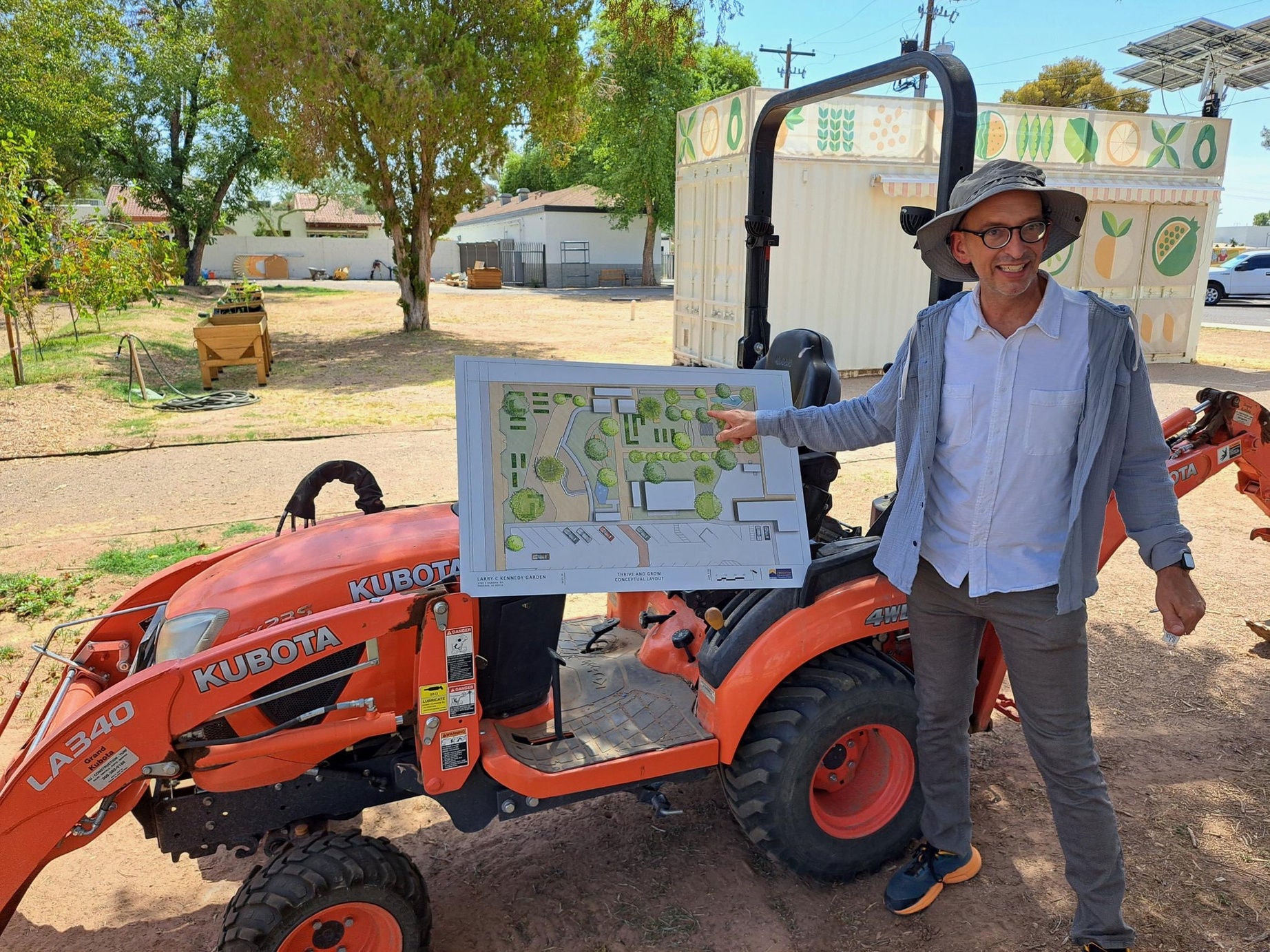
Project Title: Thrive and Grow Solar Canopy
Project Description: Creighton Community Foundation will install a solar-powered shade canopy at its Thrive & Grow site to enable off-grid cooling, water pumping, and food storage, expanding sustainable agriculture, climate resilience, and community access to fresh food.
Learn more about Creighton Community Foundation here.
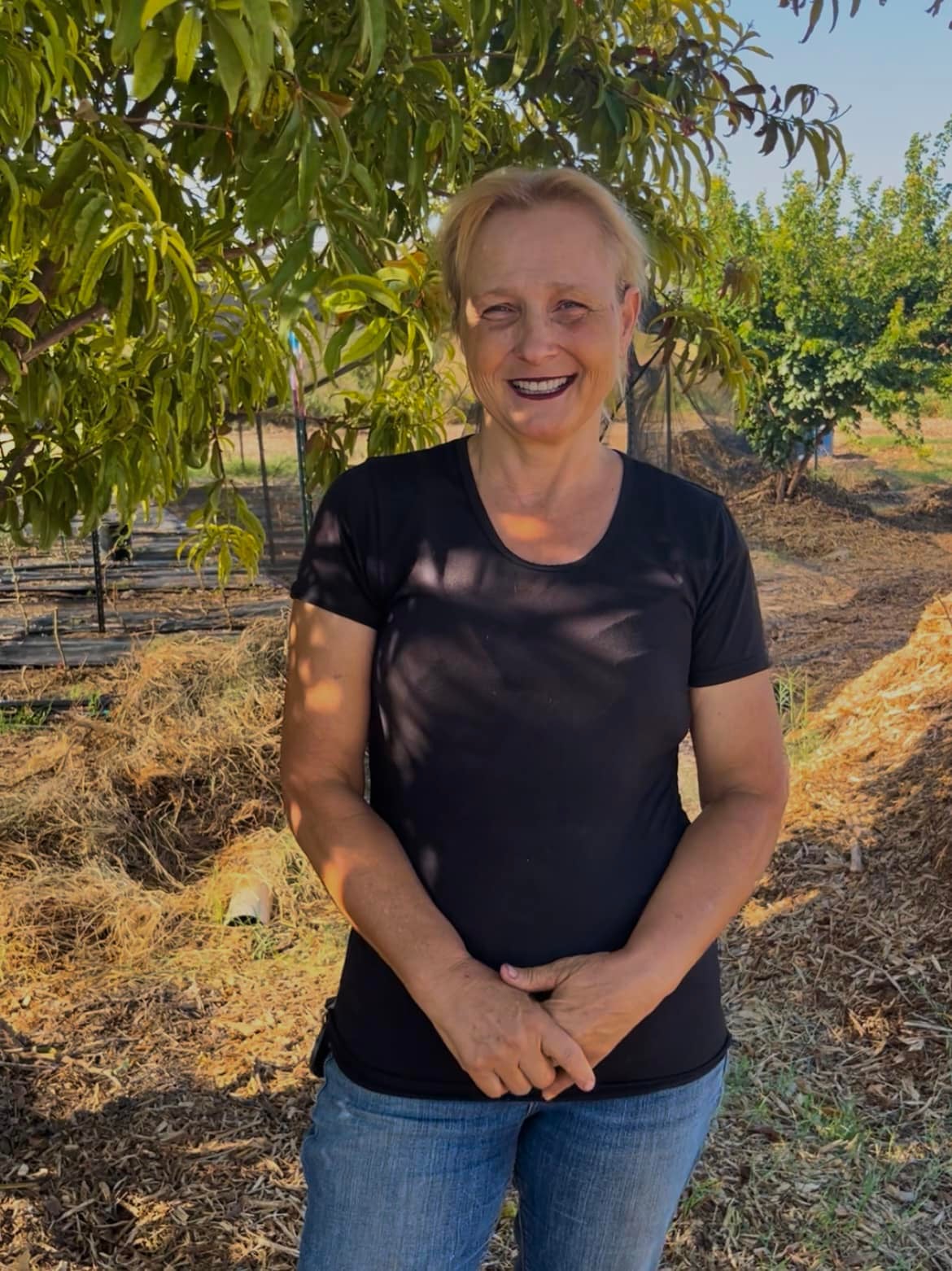
Project title: Symbiotic Innovation: Regenerative Farming through Science, Conservation, and Community
Project description: At Diemer Dream Crops Farm, I lead regenerative agriculture initiatives that improve soil health, conserve water, reduce environmental impact, and expand access to fresh, nutrient-dense food for Phoenix communities experiencing food insecurity. My efforts are rooted in a deep commitment to honoring God’s principles of stewardship, restoration, and faithful care for the land by cultivating healthy soil, sustainable food systems, and stronger, healthier communities. I specialize in compost production, strengthening the soil food web, cover cropping, precision irrigation, and reduced tillage methods that increase long-term farm resilience, productivity, and ecological balance. In addition, I provide educational outreach through workshops, farmers markets, and on-site demonstrations that equip gardeners and beginning farmers with practical skills and hands-on experience in regenerative agriculture. This initiative supports the City of Phoenix Food Action Plan and Climate Action Plan by increasing local food production, reducing waste, promoting environmental responsibility, and improving community well-being for future generations.
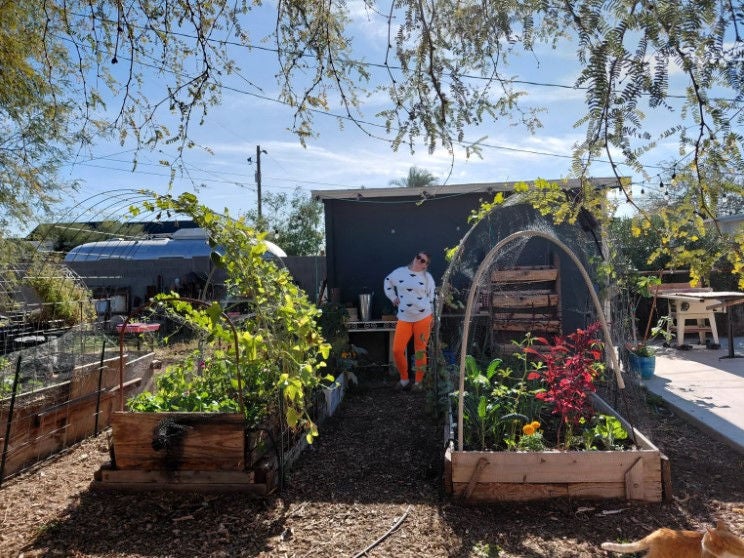
Project title: Sustainable Greenhouse Install & Preserving the Harvest
Project description: The project proposes an installation of sustainable greenhouse to extend tomato growing season and invest in the processing infrastructure to preserve excess produce for long-term storage.
Learn more about Garden Hoes Local Farm Goods here.
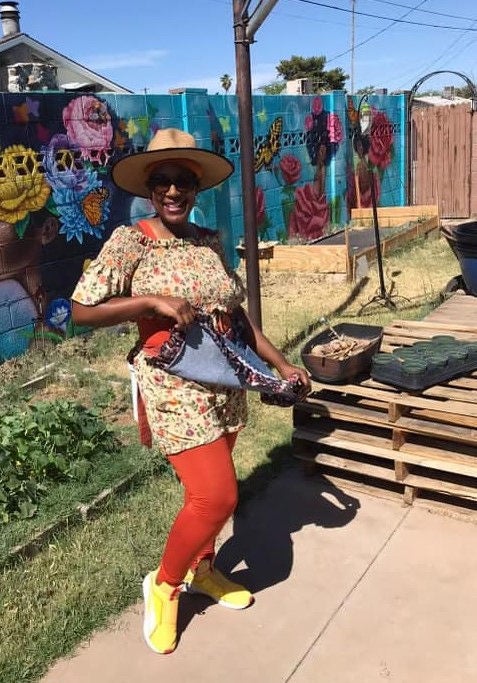
Project title: Scaling Regenerative Resilience: Climate-Adaptive Systems for Urban Herbal Agriculture
Project description: This project aims to enhance our farm’s capacity to withstand extreme heat, drought, and soil degradation through innovative infrastructure, water efficiency, and renewable energy systems. Our partnership with the City of Phoenix has supported Emerald Roots Farm Collective to become a model of regenerative, resilient food production adapted to the realities of urban heat, drought, and climate change.
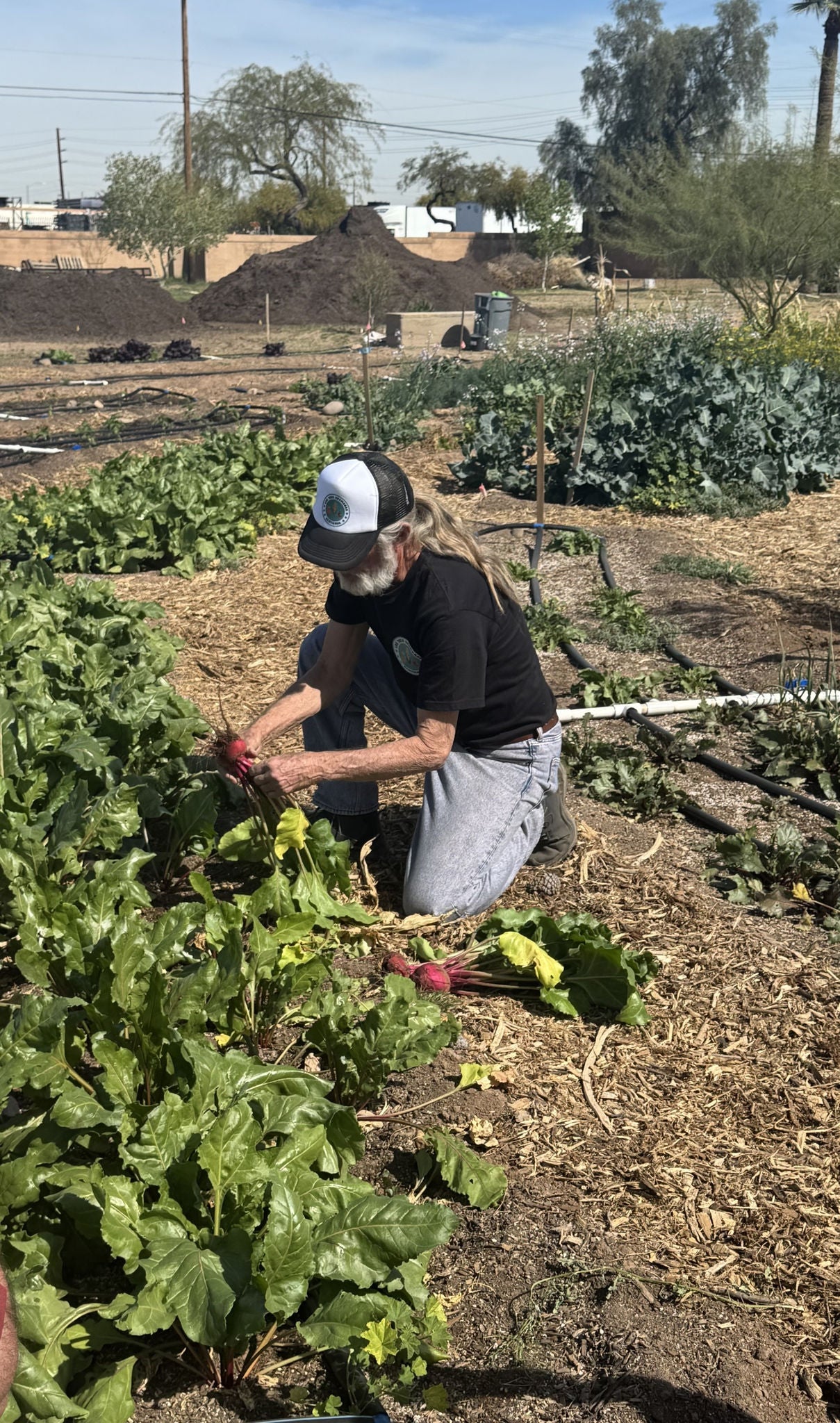
Project title: Healthy Roots Garden:Supporting an Urban Agriculture Network in South Phoenix
Project description: This is an urban ag model addressing the socio-economic/environmental issues in south Phoenix designed for climate-smart, arid-adapted agriculture while building urban food systems to service Phoenix’s cultural diversity in a food desert.
Learn morea about Orchard Community Learning Center here.
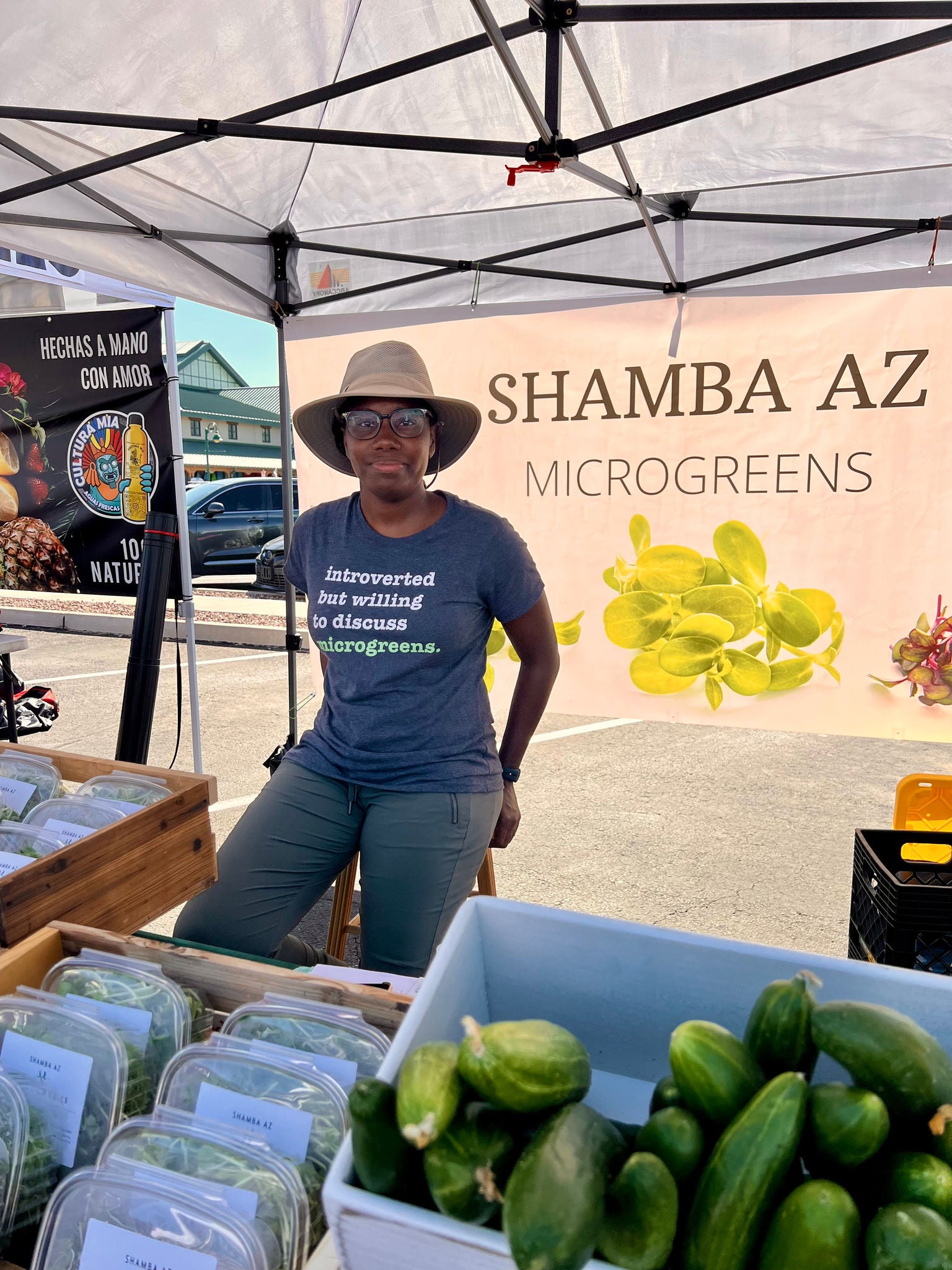
Project title: Shamba AZ Agrivoltaics: Feeding Phoenix with the sun
Project description: Shamba AZ, an urban farm operating in Phoenix since March 2022, seeks funding to install an agrivoltaics system. This system will integrate photovoltaic (PV) panels to supply power for our indoor microgreen cultivation and shade outdoor crops.
Learn more about Shamba AZ here.
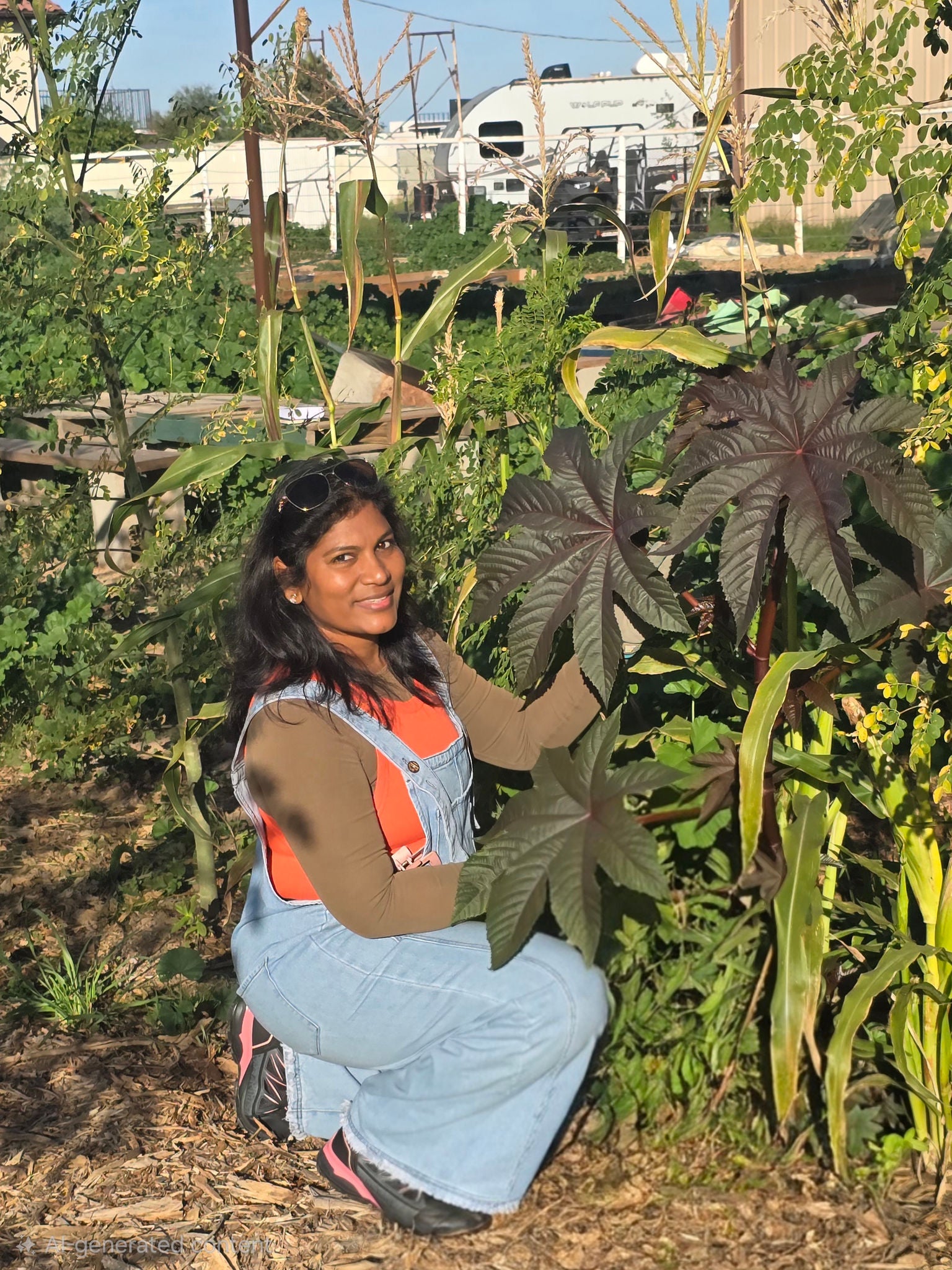
Project title: Earthwise Moringa: Phase One of Arizona’s First Climate-Resilient, Regenerative Multi-Layer Farming System from Canopy to Root
Project description: Arizona’s first Multi-Layer Farming system, focusing on Moringa as the primary canopy layer and cover crops to enrich soil and promote biodiversity. Rooted in permaculture, it integrates water efficiency and natural pest resistance.
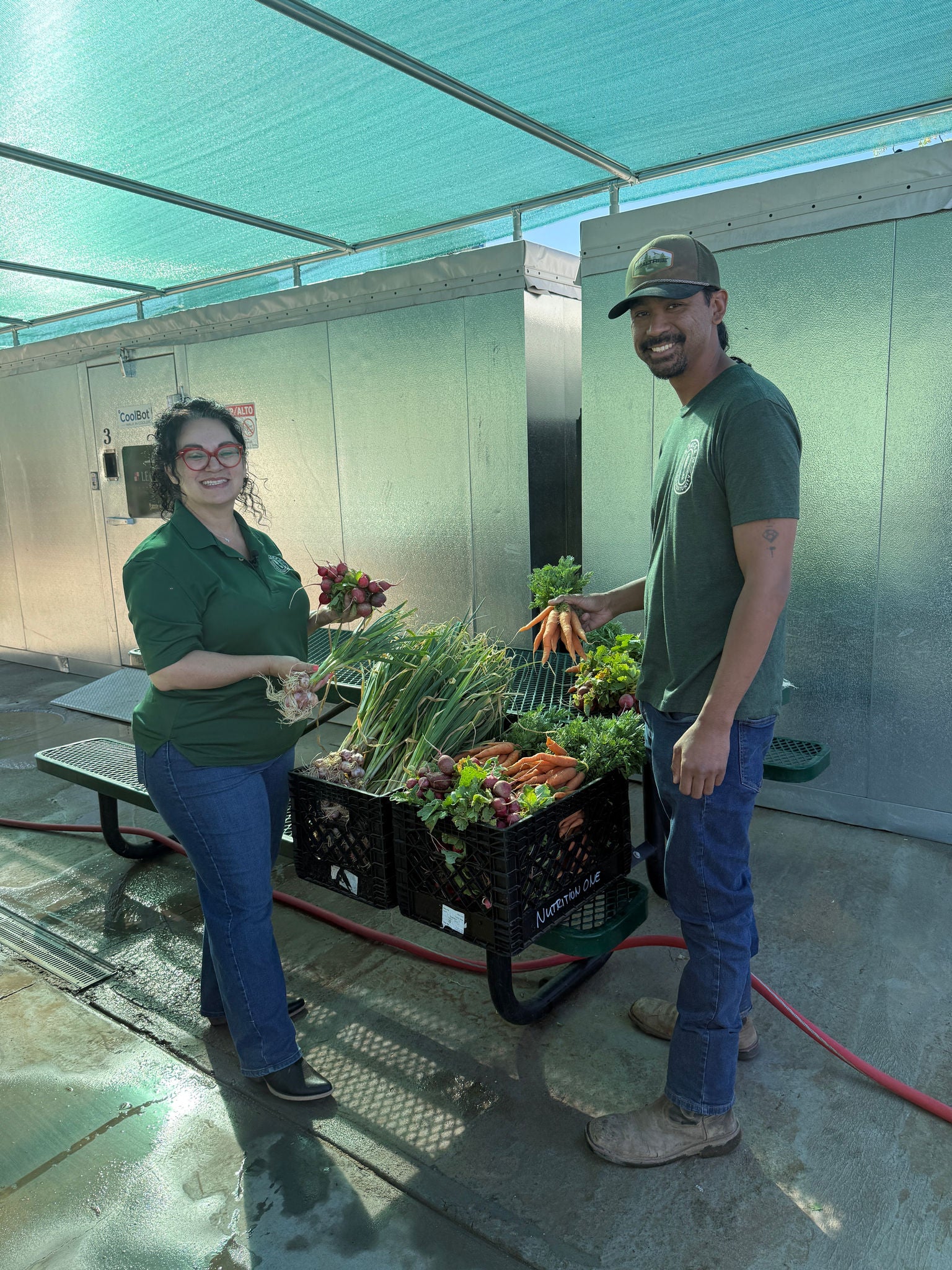
Project title: Rooted in Sustainability: Improving Infrastructure for Local Farmers
Project description: Space of Opportunity is improving community-driven spaces for farmers with compost stations, two shaded seedling tunnels, and upgraded food washing water stations to support local farmers.
Learn more about Spaces of Opportunity here.
RSA Grant Application Documents
RSA Information Sessions
The live sessions have ended, but you can still view the PowerPoint presentation to learn more about the program details, timelines, and next steps.
Contact Us
If you have any questions regarding our grant programs please email phxfood@phoenix.gov.
Note when you submit an email it falls under the city's policy which states that the email message is: (1) subject to public disclosure under the Public Records Law, (2) not private or confidential and (3) retained for 90 days.